
Foods for Digestive Health: 10 Evidence-Informed Choices

Gut Health & The Microbiome
Foods for Digestive Health: 10 Evidence-Informed Choices
Discover nutrient-rich foods that can support digestion, gut health, and overall wellness.
Introduction
Digestive wellness begins with everyday food choices. While no single food can guarantee perfect digestion or a “healthy gut,” a varied eating pattern that provides enough fiber, fluids, and nutrient-rich plant foods can help support normal digestive function.
The digestive system interacts continuously with the foods we eat. What works well for one person may not work as well for another, so digestive health is not about following a perfect food list. Instead, it is about building sustainable eating habits that provide variety and fit your individual needs and tolerance.
In this guide, we’ll explore 10 foods for digestive health, explain why they can be useful parts of a balanced diet, and share practical ways to include them in everyday meals.
🦠 GUT HEALTH HUB
This article is part of our Gut Health & The Microbiome Hub, where you’ll find evidence-based guides on digestive wellness, the gut microbiome, nutrition, probiotics, prebiotics, and practical lifestyle strategies to support long-term gut health.
10 Foods for Digestive Health
A digestive-friendly eating pattern does not need to be complicated. The goal is to include a wide variety of minimally processed foods and gradually build habits that provide fiber, nutrients, and other components of a balanced diet.
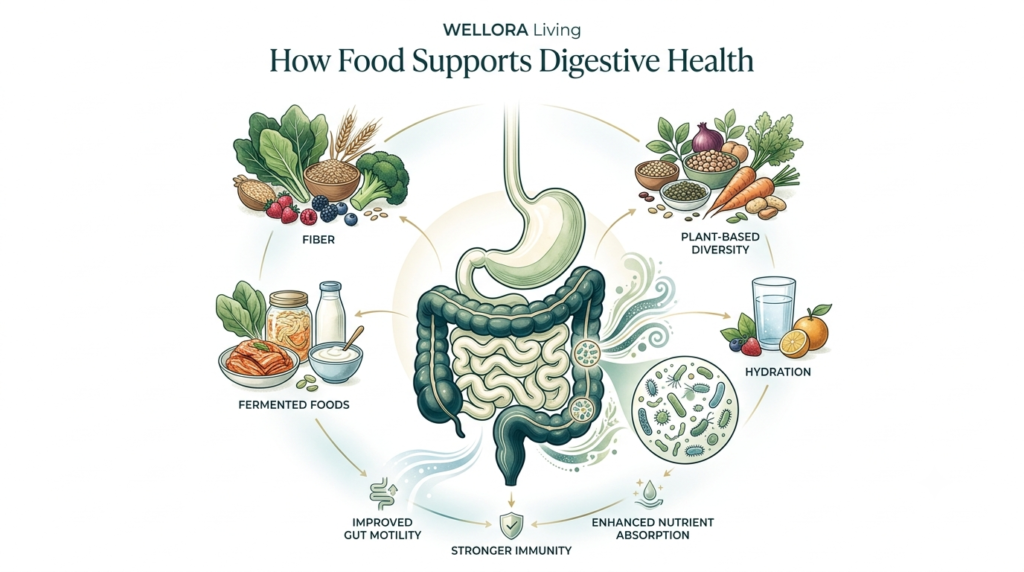
Here are 10 practical foods for digestive health to consider.
1. Fiber-Rich Vegetables
Vegetables are among the most useful foods to include in a balanced eating pattern because they provide dietary fiber, vitamins, minerals, and a wide range of plant compounds.
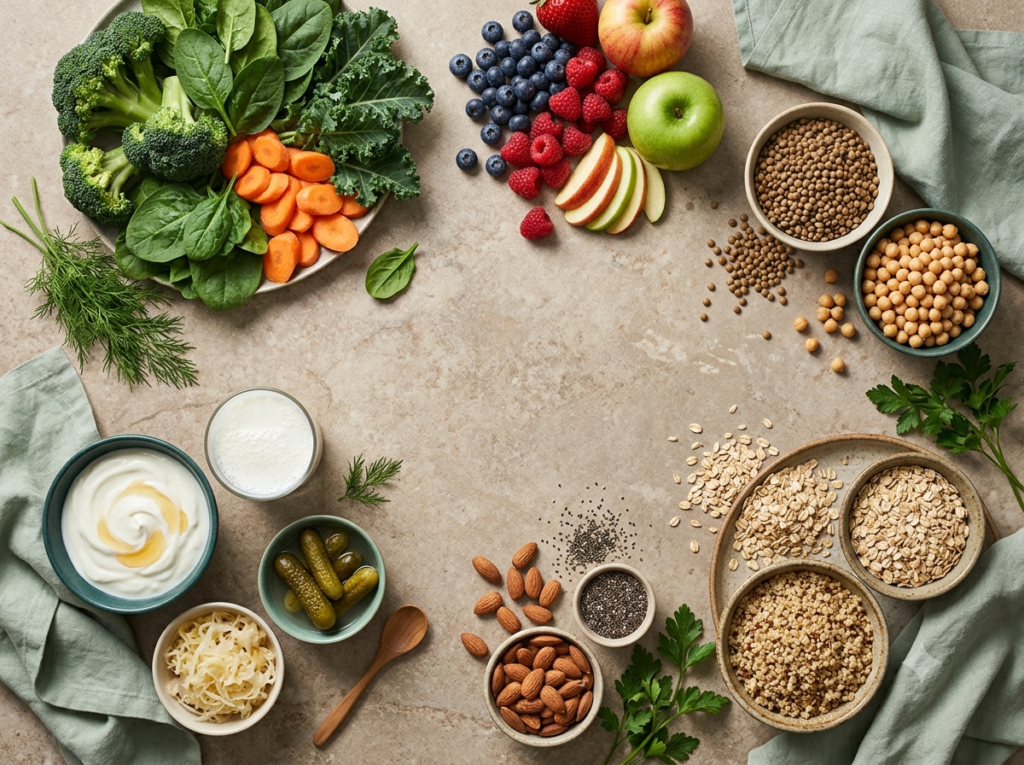
Examples include:
- Broccoli
- Carrots
- Spinach
- Brussels sprouts
- Green peas
- Sweet potatoes
- Cauliflower
Dietary fiber can support normal bowel function, although individual responses can vary. If your current diet is low in fiber, increasing it gradually while drinking enough fluids may be more comfortable than making a sudden large increase.
Practical tip:
Add an extra serving of vegetables to one meal each day and gradually build from there.
2. Fruits
Whole fruits provide a combination of fiber, water, vitamins, minerals, and naturally occurring plant compounds.
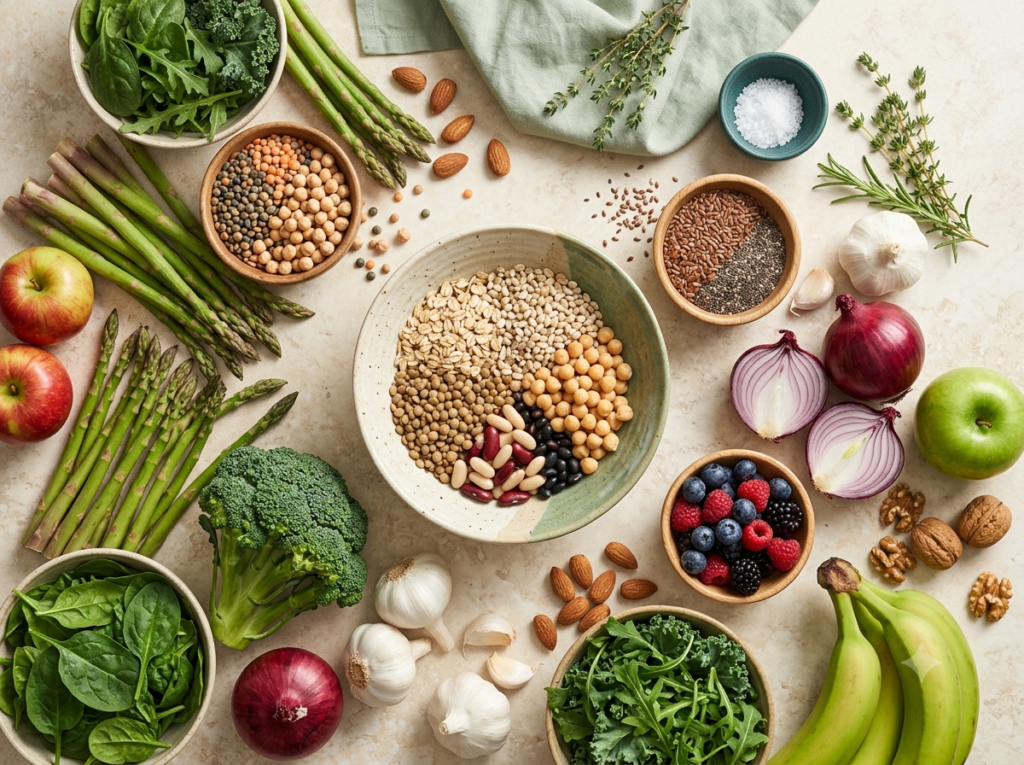
Good options include:
- Apples
- Berries
- Pears
- Oranges
- Kiwi
- Bananas
- Plums
Different fruits provide different types and amounts of fiber, so variety can be more useful than focusing on one “best” fruit.
Whole fruit is generally a more fiber-rich choice than fruit juice because the whole fruit retains its natural structure and fiber.
Practical tip:
Add berries to oatmeal, choose an apple as a snack, or include sliced fruit alongside breakfast.
3. Legumes
Legumes are nutrient-dense foods that can contribute both dietary fiber and plant-based protein to meals.
Examples include:
- Lentils
- Chickpeas
- Black beans
- Kidney beans
- Green peas
- Other varieties of beans
Because legumes can contain substantial amounts of fermentable carbohydrates and fiber, some people may experience temporary gas or bloating when they increase them quickly.
Practical tip: Start with smaller portions and increase gradually if your digestive system tolerates them well.
4. Whole Grains
Whole grains can provide dietary fiber along with nutrients that may be reduced when grains are highly refined.
Examples include:
- Oats
- Brown rice
- Barley
- Quinoa
- Whole-grain bread
- Whole-grain cereals
Including a variety of whole grains can help increase overall dietary fiber intake.
Practical tip:
Try replacing one refined grain serving with a whole-grain option and adjust according to your individual tolerance.
5. Fermented Foods
Some fermented foods contain live microorganisms, while others may not contain significant amounts of living cultures after processing. Fermented foods can nevertheless be enjoyable and nutritious additions to a varied diet.
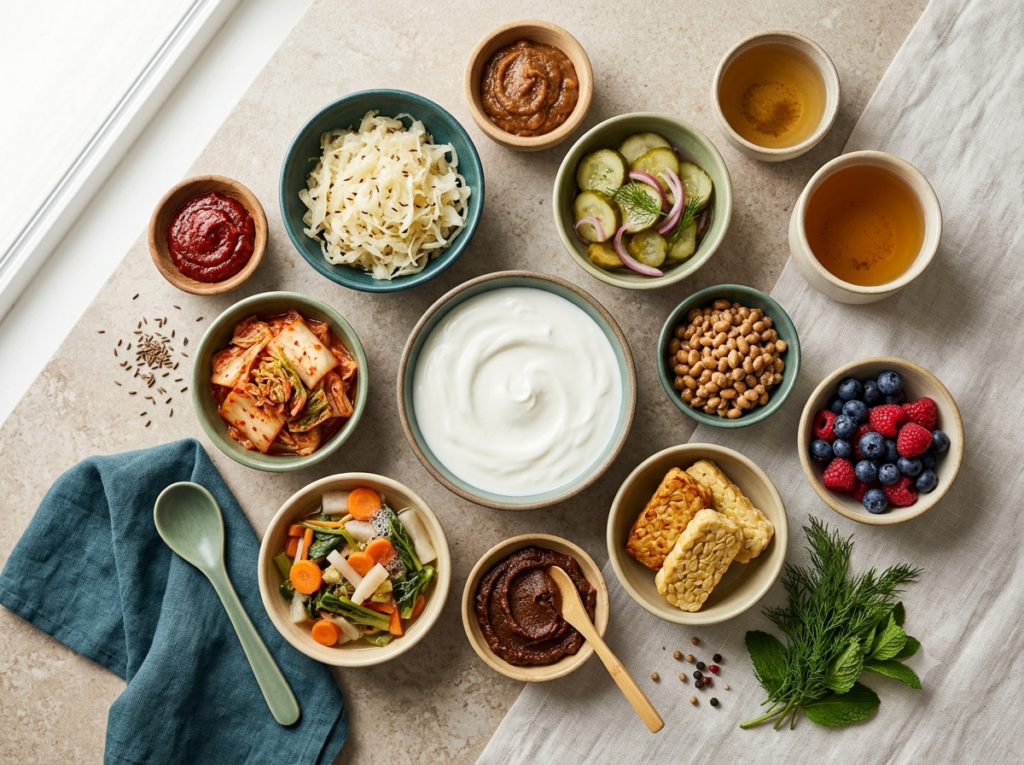
Examples include:
- Yogurt with live cultures
- Kefir
- Kimchi
- Sauerkraut
- Other traditionally fermented vegetables
Not every fermented food has the same properties, so it is useful to check the product label when live cultures are important to you.
Some people may also find certain fermented foods uncomfortable, particularly when they contain ingredients that trigger individual digestive symptoms.
Practical tip:
Choose suitable fermented foods in moderate portions and pay attention to how your body responds.
6. Nuts and Seeds
Nuts and seeds provide healthy unsaturated fats, fiber, protein, minerals, and other nutrients.
Examples include:
- Almonds
- Walnuts
- Pistachios
- Chia seeds
- Flaxseeds
- Pumpkin seeds
- Sunflower seeds
They can add texture and nutritional variety to meals while contributing to overall dietary quality.
Practical tip:
Sprinkle chia or ground flaxseed over oatmeal or yogurt, or add a small portion of nuts to a snack.
7. Prebiotic-Rich Foods
Some foods contain types of dietary fiber and carbohydrates that can be used by microorganisms in the digestive tract. These are often described as prebiotic components.
Examples include:
- Onions
- Garlic
- Leeks
- Oats
- Legumes
- Asparagus
- Certain fruits and vegetables
These foods can be part of a varied diet that supports the environment in which the gut microbiome lives.
However, more is not always better. Some people, particularly those with certain digestive sensitivities, may experience bloating or discomfort after eating large amounts of certain fermentable foods.
Practical tip:
Introduce these foods gradually rather than suddenly adding large portions.
8. Water-Rich Foods and Adequate Fluids
Hydration is an important part of normal digestion. Fluids help support many functions in the body, and adequate fluid intake can be particularly relevant when increasing dietary fiber.
Water-rich foods include:
- Cucumbers
- Melons
- Oranges
- Berries
- Tomatoes
- Soups and broths
Plain water should remain a simple everyday hydration choice for most people, although individual fluid needs vary.
Practical tip:
Keep water accessible throughout the day and include water-rich foods as part of balanced meals.
9. Variety of Plant Foods
Digestive wellness is not only about individual foods. Dietary variety matters.
Different plant foods provide different combinations of fiber and naturally occurring compounds. Eating a broader range of vegetables, fruits, legumes, whole grains, nuts, and seeds can therefore be a practical way to improve overall dietary diversity.
Think beyond a short list of “superfoods.”
Try rotating:
- Different vegetables
- Different fruits
- Different legumes
- Different whole grains
- Different nuts and seeds
- Different herbs and spices
Practical tip:
Instead of eating the same vegetables every day, choose several different types throughout the week.
10. Extra-Virgin Olive Oil and Other Unsaturated Fats
Healthy dietary fats can contribute to overall nutritional quality and make meals more satisfying.
Examples include:
- Extra-virgin olive oil
- Avocado
- Nuts
- Seeds
- Nut and seed butters
These foods can be incorporated into balanced meals alongside vegetables, whole grains, legumes, and other nutrient-rich foods.
Practical tip:
Use olive oil as a salad dressing, add avocado to a meal, or include a small serving of nuts or seeds.
How to Build a Digestive-Friendly Plate
Choosing individual foods for digestive health is useful, but your overall eating pattern matters more than any single ingredient. A simple plate-based approach can make healthy eating easier without requiring complicated meal plans.
A balanced meal can include:
- Vegetables and fruits for fiber and plant nutrients
- Whole grains or other high-fiber carbohydrate sources
- Protein-rich foods such as legumes, fish, eggs, or other suitable options
- Healthy unsaturated fats such as olive oil, nuts, seeds, or avocado
- Water or another suitable beverage
The exact proportions do not need to be perfect at every meal.
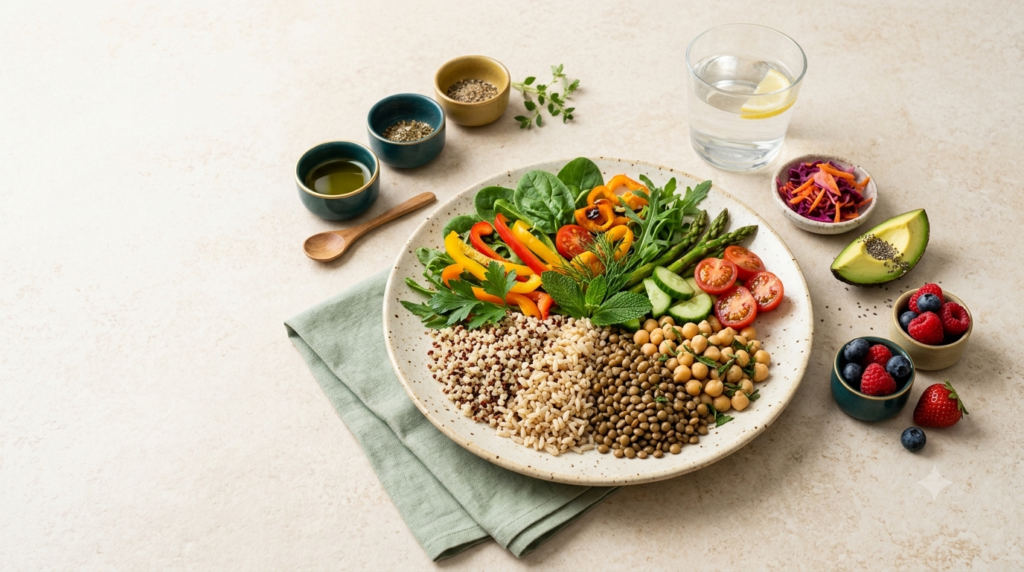
Think variety, balance, and consistency.
A practical meal might be a bowl containing vegetables, lentils, brown rice, and a small amount of olive oil, followed by fruit if desired.
The goal is not to create a “perfect gut meal.” The goal is to develop an eating pattern you can maintain over time.
Foods to Limit or Approach Thoughtfully
There is no universal list of foods that everyone must completely avoid for digestive health. Individual tolerance, portion size, overall dietary pattern, and existing health conditions can all influence how someone responds to a particular food.
However, choosing a variety of foods for digestive health can make it easier to build a balanced eating pattern i.e. it may be useful to approach certain choices thoughtfully.
Consider limiting:
- Highly processed foods that are frequently eaten in place of nutrient-rich foods
- Foods and beverages high in added sugars
- Excessive alcohol
- Very large meals if they regularly cause discomfort
- Foods that repeatedly trigger symptoms for you
Importantly, experiencing digestive symptoms after a particular food does not automatically mean that the food is unhealthy.
Sometimes the issue may relate to portion size, preparation, frequency, or individual intolerance.
If a food consistently causes significant symptoms, consider discussing the pattern with an appropriate healthcare professional rather than unnecessarily eliminating large numbers of foods from your diet.
Simple Habits That Can Support Digestive Wellness
Food is only one part of digestive health. Everyday lifestyle habits also matter.
The best foods for digestive health are usually simple, minimally processed foods that fit comfortably into your everyday meals.
Consider building these habits gradually:
- Eat a varied diet.
- Increase fiber gradually if needed.
- Drink adequate fluids.
- Stay physically active.
- Prioritize regular sleep.
- Find practical ways to manage stress.
- Pay attention to your body’s responses to foods.
- Avoid unnecessarily restrictive diets unless medically indicated.
You don’t need to change everything at once.
One sustainable improvement—such as adding another serving of vegetables, switching to whole grains, or drinking more water—can be a better starting point than attempting an unrealistic complete lifestyle overhaul.
When Should You Talk to a Healthcare Professional?
Most occasional digestive discomfort is not necessarily a sign of serious illness. However, persistent, severe, worsening, or unexplained symptoms deserve appropriate medical attention.
Consider seeking professional evaluation if you experience symptoms such as:
- Persistent or worsening abdominal pain
- Blood in the stool
- Unexplained weight loss
- Persistent vomiting
- Significant or ongoing changes in bowel habits
- Difficulty swallowing
- Persistent diarrhea or constipation
- Symptoms that interfere significantly with everyday life
A food-focused wellness routine should complement appropriate medical care, not replace it.
If you have a diagnosed digestive condition, food allergies, significant food intolerance, or specific dietary requirements, personalized guidance from a qualified healthcare professional or registered dietitian may be appropriate.
For additional evidence-based information on diet and digestive symptoms, see the National Institute of Diabetes and Digestive and Kidney Diseases (NIDDK).
Key Takeaway
The best foods for digestive health are not necessarily exotic “superfoods.”
A varied eating pattern built around vegetables, fruits, legumes, whole grains, nuts, seeds, suitable fermented foods, adequate fluids, and other nutrient-rich foods can provide a strong foundation for digestive wellness.
You don’t need a perfect diet. Rather than searching for one “perfect” food, focus on including different foods for digestive health across the week.
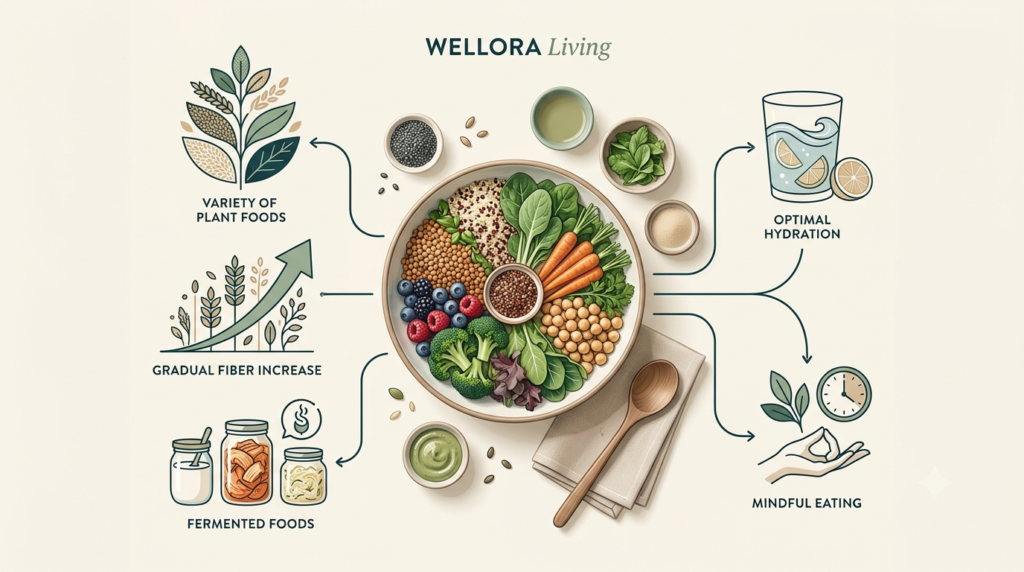
The goal is to build everyday eating habits that support a healthy digestive environment over time.
Start small. Add more variety. Increase fiber gradually. Stay adequately hydrated. And most importantly, choose an approach that is realistic for your body and your everyday life.
A balanced diet emphasizing fiber-rich whole foods can support digestive wellness and overall health.
Continue Learning
You might also enjoy:
🧬
Biohacking & Healthy Longevity →
Explore evidence-informed strategies for healthy aging, energy, and long-term wellness.
🪑
Ergonomics & Recovery →
Learn practical ways to improve posture, movement, mobility, and recovery.
📚
Wellness Resources Hub →
Explore practical resources and evidence-informed wellness guidance from WELLORA.