Spiritual Wellbeing
🌿 WHOLE-PERSON WELLNESS
Spiritual Wellbeing
Finding meaning, inner balance, connection, and peace as part of a healthier life.
Spiritual wellbeing is about nurturing the inner dimensions of life that give us meaning, purpose, connection, reflection, and a sense of peace. It can be expressed through mindfulness, gratitude, time in nature, meaningful relationships, prayer, meditation, personal reflection, service, or simply creating space to reconnect with what matters most.
At WELLORA Living, we see spiritual wellbeing as one part of a broader approach to whole-person wellness — one that respects the body, mind, relationships, values, and individual journey of every person.
🧘
Mindfulness
Awareness & Presence
🌱
Meaning
Purpose & Inner Growth
🤝
Connection
Compassion & Belonging
What Is Spiritual Wellbeing?

Spiritual wellbeing refers to the ways we develop a sense of meaning, purpose, connection, values, reflection, and inner balance in our lives.
It is deeply personal. For some people, spirituality is closely connected with religious faith. For others, it may be expressed through mindfulness, nature, meditation, creativity, relationships, service, reflection, or a personal sense of purpose.
Spiritual wellbeing does not require adherence to one particular belief system. It can be explored in ways that are personally meaningful, respectful, inclusive, and consistent with an individual’s values.
“There is no single definition of a meaningful life”.
Why Spiritual Wellbeing Matters
Health is not experienced only through the physical body. How we understand our lives, relate to others, respond to challenges, and find meaning can influence our overall sense of wellbeing.
This does not mean that our thoughts or beliefs cause every illness. Health is shaped by many interacting biological, psychological, social, environmental, and behavioural factors.
Meaning & Purpose
Understanding what gives your life direction and significance.
Inner Calm
Creating opportunities for stillness, awareness and reflection.
Connection
Nurturing relationships, belonging and compassion.
Values & Growth
Living in ways that reflect what genuinely matters to you.
Inner Life, Suffering & Healing
Every human being experiences suffering.
Sometimes suffering comes from illness, injury, loss, loneliness, uncertainty, trauma, difficult circumstances, or the natural challenges of life. Sometimes we also experience an inner form of suffering — fear, guilt, grief, anger, emptiness, hopelessness, or a loss of meaning.
Our inner life does not explain every illness, and disease should never be understood as a punishment for negative thoughts, insufficient faith, or personal weakness.
But our inner world can influence how we experience difficulty, how we respond to stress, how we care for ourselves, how we connect with others, and how we find meaning while moving through challenging experiences.
The relationship between inner life and health
1. Thoughts & Emotional Stress
Persistent emotional stress can affect how a person experiences daily life and may influence sleep, behaviour, coping and wellbeing.
Mindfulness-based practices have shown potential benefits for stress, anxiety, depression and sleep, although effects vary and they are not substitutes for appropriate treatment.
2. Meaning & Resilience
When people can identify values, purpose or meaning during difficult periods, these may provide a framework for coping and continuing forward.
Meaning does not remove suffering.
It can sometimes change how we carry it.
3. Connection & Belonging
Humans are relational beings.
Feeling connected to family, friends, community or supportive relationships can contribute to wellbeing, while loneliness and social isolation are associated with significant physical and mental health consequences. WHO currently estimates that about 1 in 6 people worldwide experience loneliness.
4. Inner Conflict & Behaviour
What happens inside us can sometimes influence what happens outside us.
Stress, emotional distress or unresolved difficulties may affect:
But these relationships are complex and never reduce illness to personal responsibility alone.
5. Pain & the Human Experience
Pain is not merely a physical sensation; the experience of pain can be influenced by multiple biological and psychological factors.
Some mind-body approaches, including mindfulness, may help some people manage certain forms of chronic pain, although research findings are mixed and these practices should complement—not replace—appropriate medical care.
Spiritual Wellbeing Is Not Blame
Compassion begins when we stop asking, “What is wrong with you?” and begin asking, “What are you going through, and how can we support you?”
Six Dimensions of Spiritual Wellbeing
1. Meaning & Purpose
Reflecting on what gives your life direction and significance.
2. Mindfulness & Presence
Learning to notice the present moment with greater awareness and less automatic judgment.
3. Gratitude
Recognizing meaningful people, experiences and moments without denying life’s difficulties.
4. Connection & Belonging
Developing meaningful relationships with people, community, nature or something personally meaningful.
5. Compassion & Kindness
Practicing kindness toward yourself and others.
6. Reflection & Inner Growth
Learning from experiences and continually understanding yourself more deeply.
8 Simple Practices for Spiritual Wellbeing
☀️ Begin the Day With Quiet Reflection
Spend a few minutes without screens and consider how you want to approach the day.
♡ Practice Gratitude
Notice a few things that genuinely matter to you.
🌿 Spend Time in Nature
Walk, sit, garden, observe, breathe and allow yourself to slow down.
◉ Practice Mindful Breathing
Pause and bring gentle attention to your breathing and the present moment.
✦ Reflect on Your Values
Ask:
What truly matters to me?
🤝 Nurture Meaningful Relationships
Make time for people with whom you can experience trust, belonging and mutual support.
◌ Make Space for Prayer, Meditation or Contemplation
Choose whatever form of quiet reflection is meaningful to you.
♡ Practice Everyday Compassion
Small acts of kindness can become powerful expressions of a meaningful life.
The Inner Life and Whole-Person Wellness
At WELLORA Living, we believe wellbeing is more than the absence of illness. It is the ongoing process of caring for the different dimensions of our lives — our body, our mind, our relationships, and our inner sense of meaning and purpose.
These dimensions influence one another throughout everyday life. How we sleep can affect our mood and energy. How we manage stress can influence our habits and relationships. Feeling connected to others can strengthen our sense of belonging and resilience. Having meaning and purpose can help us navigate challenges and make choices that reflect what truly matters to us.
At the same time, no single dimension can explain the whole human experience. Physical illness is not simply a result of emotional or spiritual problems, and difficult life circumstances cannot always be changed through mindset alone.
Whole-person wellness means caring for the whole human being while respecting the complexity of health.
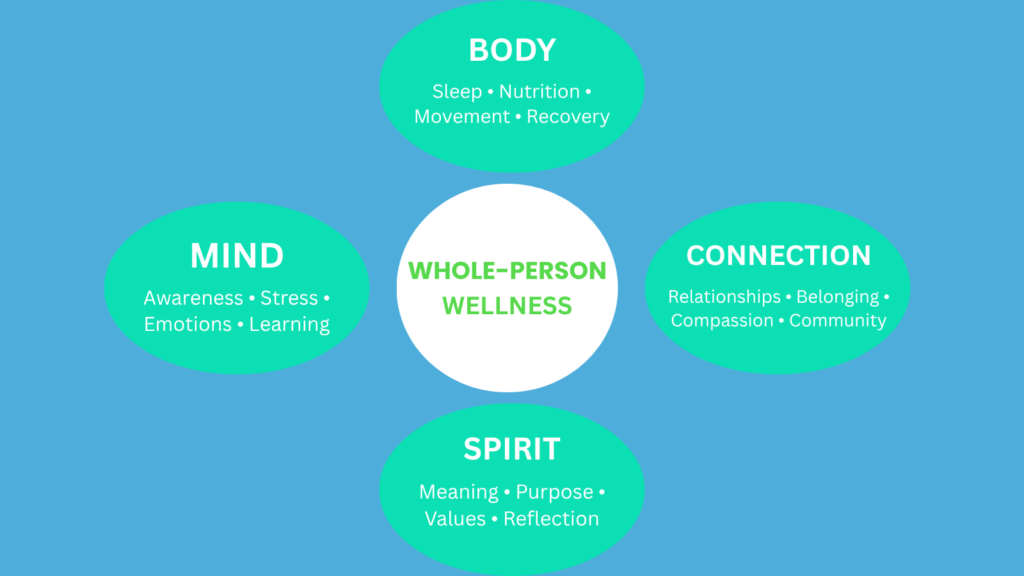
♧ 1. BODY
Sleep • Nutrition • Movement • Recovery
The body provides the foundation for physical wellbeing. Adequate sleep, nourishing food, regular movement, and meaningful recovery help support energy, physical function, resilience, and long-term health.
🧠 2. MIND
Awareness • Stress • Emotions • Learning
The mind shapes how we perceive experiences, respond to challenges, regulate emotions, learn, and adapt. Developing awareness and healthy ways of managing stress can support emotional wellbeing and everyday functioning.
🤝 3. CONNECTION
Relationships • Belonging • Compassion • Community
Human beings are deeply relational. Supportive relationships, belonging, compassion, and meaningful connection can contribute to wellbeing and help people navigate difficult periods of life.
✦ 4. SPIRIT
Meaning • Purpose • Values • Reflection
The spiritual dimension concerns the questions that give life depth: What matters to me? What gives my life meaning? What values do I want to live by? How do I make sense of difficult experiences? For some people this includes religious faith; for others it may involve nature, mindfulness, meditation, creativity, service, or personal reflection.
Wellbeing Is Interconnected
These dimensions do not exist in separate compartments.
A poor night’s sleep may affect mood and concentration. Ongoing stress may influence physical habits and relationships. Social isolation may affect emotional wellbeing. A strong sense of purpose may encourage healthier choices and help a person remain engaged during challenging times.
This does not mean that one dimension causes every problem in another. Human health is complex and influenced by biological, psychological, social, environmental, and behavioural factors.
Instead, the model reminds us to look at the whole person rather than a single symptom or isolated behaviour.
Better health is not only about adding years to life. It is also about supporting the quality, meaning, connection, and humanity within those years.
Why This Matters at WELLORA Living
WELLORA Living brings these dimensions together because health information should never reduce a person to a symptom, diagnosis, product, or purchase.
We explore practical ways to support physical health, mental wellbeing, meaningful connection, and a deeper sense of purpose — while keeping evidence, responsible health education, and human dignity at the center.
Our goal is not simply to help people live healthier lives. It is to help people understand their health, make thoughtful choices, build sustainable habits, and live with greater meaning and connection.
BODY • MIND • CONNECTION • SPIRIT
One person. One life. A whole approach to wellbeing.
Bringing Spiritual Wellbeing Into Everyday Life
Morning
Quiet reflection
Gratitude
Intention
During the day
Mindful pauses
Meaningful connection
Compassionate choices
Evening
Reflection
Appreciation
Digital quiet time
Rest
Spiritual wellbeing does not require a complicated routine.
Sometimes it begins with something very small:
one quiet breath, one moment of gratitude, one meaningful conversation, one act of kindness, or one honest question about what truly matters.
Spiritual Wellbeing Is Not a Substitute for Professional Care
Spiritual practices may be meaningful parts of a person’s wellbeing, but they should never replace appropriate medical or mental-health care.
If you are experiencing persistent physical symptoms, significant emotional distress, mental-health concerns, trauma-related symptoms, or a diagnosed medical condition, seek guidance from an appropriately qualified healthcare professional.
Meditation, prayer, reflection and other spiritual practices may complement appropriate care, but they should not be presented as cures for disease.
❤️ Beyond Belief: The Shared Human Experience
We may differ in culture, religion, philosophy, language and the ways in which we understand life. Yet suffering, hope, love, loss, kindness, fear, healing and the search for meaning are experiences that connect us as human beings.
Spiritual wellbeing does not have to divide us according to what we believe.
It can remind us of what we share.
The ability to listen.
The courage to understand.
The willingness to forgive.
The strength to help.
The humility to learn.
And the compassion to recognize another person’s suffering as human.
A healthier world is not created only by healthier bodies.It is also created by healthier relationships, greater compassion, deeper understanding and a willingness to care for one another. 🌿❤️
Frequently Asked Questions About Spiritual Wellbeing
Explore More Ways to Support Whole-Person Wellness
🌿 Healthy Longevity
Build healthier habits for a longer, more active life.
🧘 Mindfulness & Stress
Discover practical approaches to awareness, stress management and emotional wellbeing.
🌱 Recovery & Everyday Wellness
Explore practical ways to support recovery, mobility, rest and sustainable daily wellbeing.
A Note From WELLORA Living
Every person’s journey through health, suffering, recovery and meaning is different.
At WELLORA Living, we believe evidence-informed health education should be accompanied by something equally important: humanity.
We can care for the body without forgetting the person.
We can respect science without losing compassion.
We can acknowledge suffering without blaming the person who suffers.
And we can pursue better health while remembering that wellbeing is not only about living longer — it is also about living with greater meaning, connection, dignity and kindness.
Better health. Deeper meaning. Greater humanity.
🌿 WELLORA Living!
Explore whole-person wellness: The Gut Health & The Microbiome hub offers evidence-informed guidance on digestion, nutrition, and the gut–brain connection.